



When most people think about construction, they picture the visible milestones: excavators breaking ground, steel frames rising, crews moving with purpose across a busy site. It’s a process that feels tangible and easy to follow. But long before any of that begins, there is a quieter, highly technical phase that determines whether a project will succeed or struggle.
This early stage rarely gets attention, yet it shapes everything that follows. In communities like Parsippany, where development must balance growth with precision and compliance, the invisible work behind construction is often the most important part of the entire process.
Where Every Project Really Begins
Construction does not start with machinery, it starts with data. Before plans can be executed, the land itself must be fully understood. This includes boundaries, elevations, slopes, and how the site interacts with surrounding properties and infrastructure.
Even small inaccuracies at this stage can create ripple effects. A slight miscalculation in elevation might lead to drainage problems. An unclear boundary could result in disputes or delays. These are not rare scenarios, they are common consequences when early-stage precision is overlooked.
That’s why the role of a construction surveyor is so central to modern building projects. By translating architectural designs into exact physical positions on the ground, they ensure that what is built aligns perfectly with what was planned. It’s a technical process, but its impact is very practical: fewer surprises, fewer corrections, and a smoother path forward.
Coordination Behind the Scenes
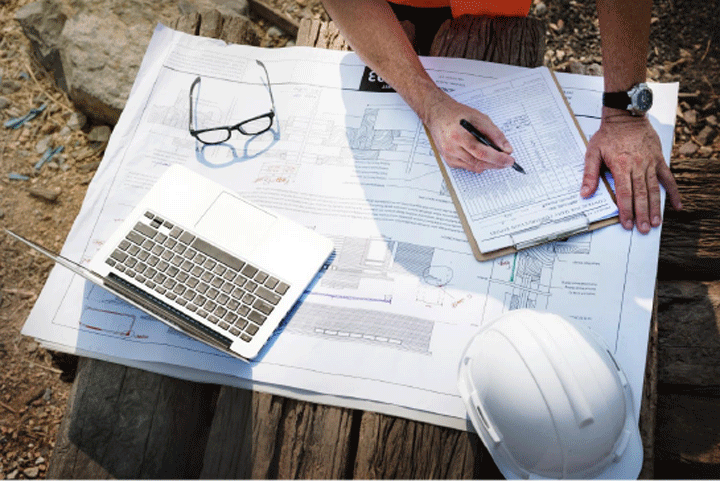
Modern construction is rarely a solo effort. It involves architects, engineers, contractors, inspectors, and project managers, all working toward a shared goal. For this collaboration to function smoothly, everyone must rely on consistent, accurate information.
Surveying plays a crucial role in this coordination. It provides a common reference point that aligns every stage of the project. When measurements are clear and reliable, teams can work with confidence. When they are not, even small inconsistencies can lead to confusion and rework.
For example, during the layout phase, contractors depend on precise markers to position structural elements. If those markers are even slightly off, adjustments must be made later, often at a higher cost and under tighter time constraints.
The invisible work of surveying helps eliminate this uncertainty. It creates a framework where each step builds logically on the last.
The Cost of Getting It Wrong
Mistakes in construction are rarely isolated. When something goes wrong early on, it tends to affect multiple stages of the project. A misplaced foundation can alter framing. Incorrect grading can impact drainage systems. What might begin as a minor issue can quickly evolve into a costly correction.
Research from the National Institute of Building Sciences emphasizes that early planning and site accuracy are among the most effective ways to reduce construction errors and long-term maintenance issues. In other words, precision at the beginning is not just about getting things right, it’s about preventing problems that might otherwise surface months or even years later.
For property owners and developers, this translates into both financial and operational benefits. Fewer delays mean better timeline control. Fewer errors mean fewer unexpected costs. And a well-executed foundation supports everything that follows.
Technology Is Changing Expectations
The tools used in construction surveying have evolved significantly in recent years. Advanced GPS systems, laser scanning, and drone-based mapping now allow for highly detailed site analysis. These technologies provide a level of accuracy that was once difficult to achieve, reducing the margin for error and improving overall efficiency.
But technology alone is not the solution. It must be applied within a structured process, guided by expertise and careful interpretation. The combination of advanced tools and professional oversight is what ensures that data is not only accurate, but also meaningful.
As a result, expectations across the industry have shifted. Precision is no longer optional, it is the standard. Projects that fail to meet this standard are more likely to encounter setbacks, whether through compliance issues, delays, or unexpected redesigns.
Why Planning Is Becoming More Important
As communities grow and development becomes more complex, the need for structured planning continues to increase. New construction must often integrate with existing infrastructure, meet regulatory requirements, and adapt to environmental conditions. Each of these factors adds another layer of complexity.
In this environment, the early stages of a project carry more weight than ever before. Decisions made during planning influence not just the construction phase, but the long-term performance of the property.
For homeowners considering renovations or new builds, this shift is especially important. What might seem like a straightforward project can quickly become complicated without the right preparation. Understanding the value of early-stage work, including accurate surveying, helps set realistic expectations and reduces the likelihood of setbacks.
A More Complete View of Construction
It’s easy to focus on the visible aspects of construction because they are immediate and tangible. But the success of any project depends just as much on what happens out of sight. Measurements, data analysis, and coordination form the foundation on which everything else is built.
Recognizing this hidden work leads to better decisions. It encourages property owners and developers to invest in accuracy from the beginning, rather than correcting mistakes later. It also highlights the importance of professionals who specialize in translating plans into reality with precision and consistency.
In the end, the most successful construction projects are not just well-built, they are well-prepared. And that preparation, though often invisible, is what makes everything else possible.