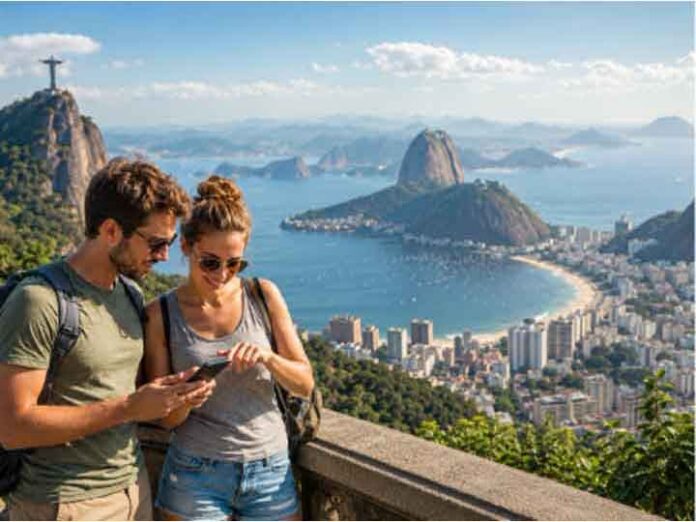



Brazil is the largest country in South America and one of the most complex international destinations for American travelers to navigate well. The country rewards preparation in ways that few other destinations do: knowing how to get around, what to avoid, how to eat well without overpaying, and how to stay safe transforms a Brazil trip from stressful to extraordinary. These tips cover the practical realities that most travel guides gloss over.
Visa: What Changed in 2024
As of 2024, Brazil reinstated visa requirements for US citizens following a brief period of visa-free access. American travelers must now obtain a Brazilian e-visa before departure. The application is completed online through the Brazilian government’s consular portal and requires a valid US passport with at least six months of remaining validity, a recent passport-style photo, proof of onward travel, and proof of sufficient funds.
Processing typically takes three to five business days under normal conditions, though delays are possible during peak periods. Apply at least two weeks before departure. Do not assume same-day or next-day processing is available.
Mobile Data: Sort This Before You Land
Brazil is not covered by US carrier international day plans without significant charges. AT&T, Verizon, and T-Mobile all charge between $10 and $25 per day for data access in Brazil. On a two-week trip that adds up to $140 to $350 before a single call is made, on top of your regular monthly bill.
The practical fix is activating a travel eSIM before you leave the US. To get unlimited data in Brazil with Holafly, purchase a plan on their website, receive a QR code by email, and scan it from your phone’s settings before boarding. Your US number stays active on your physical SIM for calls and texts, while the eSIM handles data on local Brazilian networks from the moment you clear customs at Guarulhos or Galeão.
Reliable data in Brazil is not a luxury. It is how you navigate São Paulo’s complex metro system, call a Grab or Uber, translate menus in Portuguese, and find the restaurant that is not in any guidebook.
Getting Around: What Actually Works
Brazil is the fifth largest country in the world. Flying between cities is the standard approach for any itinerary covering more than one region. Domestic airlines LATAM Brasil and Gol cover all major routes. São Paulo to Rio de Janeiro runs approximately one hour. São Paulo to Manaus, the Amazon gateway, is three hours.
Within cities, Uber and 99 are the app-based ride options that experienced travelers use consistently. Hailing taxis on the street in São Paulo and Rio is not recommended due to scam risk. App-based rides display the fare before you confirm, the driver’s identity is verified, and the route is tracked. This removes the two most common friction points with street taxis in Brazilian cities.
São Paulo’s metro is clean, efficient, and covers most business and tourist districts in the city center. Rio’s metro is more limited but connects Ipanema, Copacabana, and the city center reliably. Both systems use contactless payment.
Rio de Janeiro: Where to Go and What to Skip
Rio is where most American travelers begin a Brazil trip, and it delivers on its reputation for natural beauty. Christ the Redeemer, Sugarloaf Mountain, and the beaches of Copacabana and Ipanema are not overhyped. The challenge is navigating the gap between the iconic experience and the tourist trap experience, which in Rio is sometimes only a block apart.
The Copacabana Night Market on Avenida Atlântica is one of the most accessible authentic experiences in Rio for visitors. Over one hundred vendors set up every evening from 4pm to midnight along the Copacabana beachfront, selling souvenirs, clothing, and artisanal products. Rated 4.6 from over 570 reviews, it is consistently praised for variety, price, and atmosphere. Vendors arrive fully by 6pm. Haggling is expected and starting at half the asking price is the standard approach.
Feira Hippie de Ipanema at Praça General Osório is the Sunday market that locals and serious visitors prefer over the more touristy alternatives. Running every Sunday from 8am to 6pm, it features genuinely unique handcrafted items including leather goods, original paintings, batik textiles, and jewelry from Brazilian artisans. Rated 4.5 from over 1,000 reviews. Several visitors specifically note it as superior to the Copacabana market for quality and originality. Go before noon for the best selection.
Brazil Expedition Day Tours, operating out of Ipanema, is the most consistently rated tour operator in Rio for Americans who want guided experiences with local context. Their city tours, favela tours, and street art tours are led by guides who receive individual praise in reviews consistently. Rated 4.8 from 144 reviews, they operate daily from 8am to 10pm and are reachable at their Prudente de Morais street office.
Food: The Rules That Save You Money and Improve the Experience
Brazilian food culture operates on rhythms that differ significantly from American expectations, and understanding them changes the budget and quality of every meal.
The prato feito, or PF, is the working lunch of Brazil: a plate of rice, beans, protein, and salad served at lunchtime for between R$15 and R$30 at local restaurants. It is not a tourist dish. It is what office workers, construction crews, and shopkeepers eat for lunch every day, and it is almost always better and cheaper than anything on the tourist menu at the same establishment. Look for the handwritten sign or chalkboard that says PF or Prato Executivo.
Rodízio, the all-you-can-eat format where servers bring continuous rounds of grilled meat to your table, originated in Brazil and is the format American visitors are most familiar with. It is excellent in São Paulo and Rio but varies enormously in quality and price. Prices have risen significantly since 2022. Budget R$100 to R$200 per person at a mid-range rodízio, more at premium establishments.
Juice bars are one of the most underused resources for American visitors. Every Brazilian neighborhood has at least one juice bar serving fresh-pressed combinations of tropical fruits unavailable in the US: açaí, cupuaçu, graviola, cajá, and dozens of others. A large fresh juice costs R$8 to R$15. This is breakfast and mid-afternoon sustenance that requires no Portuguese beyond pointing at the menu board.
Safety: The Realistic Picture
Brazil requires safety awareness that exceeds what most Americans apply in European destinations. The realistic picture is neither the horror show of outdated travel warnings nor the breezy dismissal some recent travel influencers suggest.
The precautions that consistently matter: use app-based transport rather than hailing rides on the street, keep your phone in your pocket rather than your hand when walking in unfamiliar areas, leave expensive jewelry and watches at home or in the hotel safe, and avoid walking in areas you do not know after dark without local guidance.
The areas where American visitors concentrate in Rio (Ipanema, Leblon, Copacabana, Santa Teresa during daylight hours) and São Paulo (Pinheiros, Vila Madalena, Itaim Bibi, Jardins) are navigable with standard awareness. The situations that generate incidents almost always involve either displaying valuables conspicuously or venturing into unfamiliar peripheral neighborhoods without local knowledge.
Register with the US State Department’s Smart Traveler Enrollment Program before departure. It is free and ensures the nearest US consulate can contact you in an emergency.
Currency and Money Management
The Brazilian real (BRL) is the local currency. Credit cards are accepted in hotels, shopping centers, and most mid-range to upscale restaurants. Street food, local bars, markets, and smaller establishments operate on cash.
Withdraw reais from ATMs at your destination rather than exchanging dollars before departure. Airport currency exchange desks in Brazil apply significant margins. Banco do Brasil and Bradesco ATMs at international airports typically offer the most reliable access for foreign cards, though fees vary by your US bank.
Inform your US bank and credit card company of your travel dates before departure. Cards flagged for unusual foreign activity are blocked automatically, and resolving this from Brazil adds friction to the trip.
Brazil Travel Tips FAQs
What Portuguese phrases are essential for Brazil? Obrigado (thank you, male speaker) or obrigada (female speaker), por favor (please), quanto custa (how much does it cost), onde fica (where is), and não falo português (I don’t speak Portuguese). Brazilians respond warmly to any attempt at their language. Spanish is not interchangeable: Brazilians speak Portuguese, not Spanish, and the languages are distinct enough that Spanish speakers should not assume comprehension.
Is travel insurance necessary for Brazil? Yes, particularly medical evacuation coverage. Medical facilities in major Brazilian cities are adequate for most situations, but costs for foreign patients without insurance are unregulated and can be significant. Evacuation to the US from remote regions like the Amazon without coverage is extremely expensive.
What is the best time of year to visit Brazil? April through June and August through October avoid both the summer heat and humidity of December through February and the coolest winter months of July. Carnival, which falls in February or March depending on the year, is the peak tourism event and requires booking flights and accommodation six to twelve months in advance.
How much cash should I carry daily in Brazil? R$100 to R$200 (approximately $20 to $40 USD at current rates) covers most daily cash transactions including street food, market purchases, and small tips. Keep larger amounts secured at the hotel rather than on your person.